
The global sporting landscape is undergoing a monumental transformation in 2026, driven by the rapid integration of decentralized technologies, digital assets, and Web3 infrastructure. As the worlds of athletics and digital finance collide in unprecedented ways, understanding these synergies has never been more critical for fans, investors, and industry professionals alike. Today, the convergence is so profound that crypto news now has become an essential resource for anyone looking to stay updated on the modern business of sports Crypto News Now .
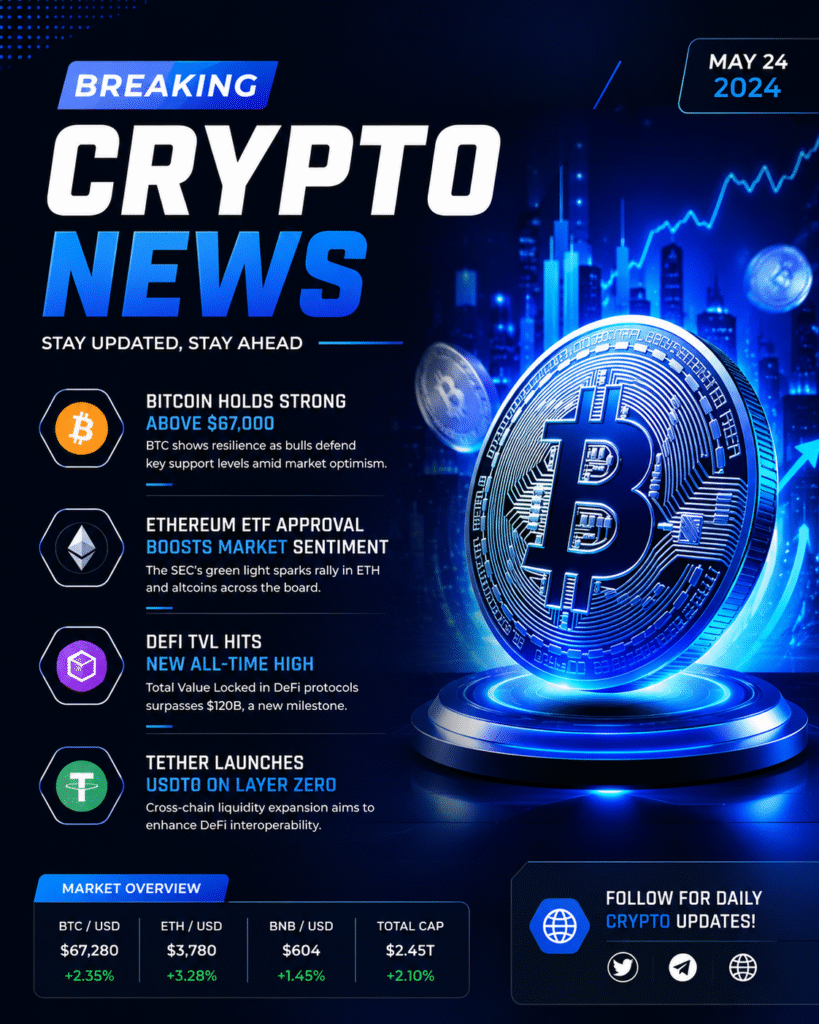
The Collision of Athletics and Digital Finance Crypto News Now
Whether it is the historic FIFA World Cup sweeping across North America, major basketball leagues redefining player contracts, or European football clubs launching next-generation fan engagement platforms, the underlying technology remains the same: decentralized ledgers. We are witnessing a paradigm shift where spectators are no longer just passive viewers; they are active participants, stakeholders, and digital owners. In this comprehensive analysis, we will explore the multifaceted relationship between global athletics and cryptographic technologies, revealing how the athletic ecosystem is being entirely rewritten from the ground up.
The 2026 FIFA World Cup: A Technological Milestone
The summer of 2026 will forever be remembered for the massive 48-team FIFA World Cup hosted jointly by the United States, Mexico, and Canada. Beyond the sheer scale of the tournament, the logistical complexities of managing millions of fans crossing international borders have necessitated innovative technological solutions. According to the most reliable Crypto News 2026, international sporting federations are aggressively piloting decentralized ticketing systems designed to permanently eradicate the black market scalping industry.
Combating Ticket Fraud with Smart Contracts Crypto News Now
By issuing match tickets as non-fungible tokens on a scalable ledger, event organizers ensure that every ticket possesses an immutable, transparent history. If a fan wishes to resell their seat for the highly anticipated final at MetLife Stadium, smart contracts automatically govern the transaction, capping the resale price and directing a small royalty back to the organizing committee. This guarantees authenticity and completely removes fraudulent duplicate tickets from the ecosystem. Furthermore, fans attending matches in Mexico City, Los Angeles, and Toronto are utilizing decentralized digital identities to streamline stadium entry, purchase merchandise, and securely access exclusive VIP areas Crypto News Now .
Redefining Loyalty Through Fan Tokens Crypto News Now
For decades, supporting a favorite team meant buying a jersey, attending games, and perhaps calling into a local radio show. Today, the dynamic has shifted toward active governance and verifiable digital loyalty. Fan tokens have emerged as one of the most successful use cases of decentralized technology in the athletic realm. By holding these specialized digital assets, supporters gain access to exclusive voting rights on club decisions, elevating their status from mere consumers to integral community members Crypto News Now .
Active Governance Over Passive Fandom Crypto News Now
Checking the Latest Crypto News, one can see countless examples of top-tier European football teams, Formula racing outfits, and major esports organizations leveraging these tokens to deepen their relationship with their global fanbases. Token holders might vote on the design of the team’s third kit, the entrance music played at the home stadium, or the charitable initiatives the club will support for the fiscal year. This model democratizes certain aspects of club management, giving a unified voice to international supporters who may live thousands of miles away from the actual stadium Crypto News Now .
Athletes Choosing Digital Assets Over Fiat
The financial psychology of the modern athlete has fundamentally shifted. Rather than relying solely on traditional fiat currency and standard wealth management, a growing number of elite competitors in professional basketball, American football, and mixed martial arts are opting to receive portions of their lucrative contracts in digital assets. To understand the motivations behind this trend, referencing reputable Crypto Money News provides clear insights into the macroeconomic factors at play, such as long-term inflation hedging and personal brand modernization Crypto News Now .
Inflation Hedges and Generational Wealth
For many high-net-worth competitors, converting a multi-million dollar salary into decentralized digital stores of value represents a long-term investment strategy. By taking their compensation in BTC or Ethereum, athletes are directly participating in the digital economy. Some have even negotiated clauses where their signing bonuses are paid entirely in virtual assets, instantly converting traditional payroll into a decentralized portfolio. This trend extends beyond mere investment; it is a cultural statement. Athletes are positioning themselves as forward-thinking entrepreneurs, aligning their personal brands with the tech-savvy, younger demographics that heavily engage with Web3 ecosystems.
The Evolution of Web3 Sponsorships
A few years ago, the idea of a virtual currency exchange securing the naming rights to a legendary sports arena seemed like science fiction. Today, it is a dominant reality. The infusion of Crypto Money into athletic sponsorships has reshaped team valuations and league revenues. From the iconic arenas in Los Angeles to the training kits of Premier League giants, Web3 branding is ubiquitous, representing one of the largest influxes of capital the sports marketing sector has seen in decades.

Naming Rights and Jersey Integrations
These partnerships go far beyond simply slapping a logo on a jersey or a stadium billboard. Modern decentralized sponsorships involve deep integrations, such as offering fans exclusive digital collectibles, seamless in-stadium payments using virtual currencies, and interactive augmented reality experiences during halftime shows. For the platforms sponsoring these teams, the goal is mass market penetration and trust-building. Exploring Money Crypto News reveals how athletic organizations are now structuring these multi-year deals with more stringent financial safeguards and escrow accounts to protect themselves against unexpected market downturns, ensuring stability while embracing innovation.
NFT Collectibles: Moving Beyond Physical Memorabilia
Physical trading cards have long been the staple of athletic memorabilia, capturing iconic moments on cardboard. The Web3 revolution has taken this concept and digitized it, creating verifiable scarcity through non-fungible tokens. Fans can now own the actual digital video highlight of a game-winning shot or a spectacular goal, authenticated permanently on a decentralized network that guarantees the item’s provenance and absolute rarity.
True Digital Ownership
As detailed in any comprehensive Crypto News outlet, this digital memorabilia market has evolved into a multi-billion dollar industry. Platforms that officially partner with major basketball and football leagues allow users to buy, sell, and trade these digital moments in highly active secondary markets. Unlike physical cards, which can degrade over time and require professional grading services to determine authenticity, digital collectibles are pristine, instantly verifiable, and globally transferable in seconds. Furthermore, these digital assets often come with additional utility. Owning a rare highlight might grant the holder VIP access to an upcoming game or exclusive physical merchandise.
DAOs and the Future of Team Ownership
Perhaps the most revolutionary concept emerging at the intersection of decentralized technology and athletics is the Decentralized Autonomous Organization, or DAO. A DAO is a community-led entity with no central authority, governed entirely by smart contracts and token-based voting. Recently, we have witnessed ambitious DAOs pooling millions of dollars in virtual currency to purchase actual professional sports teams, challenging the traditional billionaire-owner paradigm.
Decentralized Acquisition Models
When reading Blockchain News, the stories of internet communities successfully acquiring lower-league football clubs, professional golf leagues, or esports franchises are becoming increasingly common. Instead of a single wealthy individual making all executive decisions, the DAO members vote on everything from front-office hires to general strategic direction. According to recent Crypto Market News, while the concept is highly egalitarian, it faces significant regulatory and logistical hurdles. Professional leagues often require a primary controlling owner to be legally accountable, making the integration of a decentralized ownership structure legally complex. Nevertheless, this continuous push represents one of the most fascinating experiments in modern athletic governance.
Smart Contracts Transforming the Betting Landscape
The sports wagering industry is enormous, but it has historically been plagued by issues of transparency, delayed payouts, and high operator fees. Web3 technologies are addressing these inefficiencies head-on through the implementation of smart contracts. These self-executing agreements automatically facilitate payouts based on verifiable, real-world data provided by digital oracles, completely circumventing traditional bookmaking intermediaries.
Eliminating the Traditional Bookmaker
If you are following the Digital Currency News, you will note how decentralized prediction markets are gaining immense traction. In these systems, there is no centralized entity setting the odds or holding the funds. Instead, users bet directly against one another, with the smart contract holding the wagered assets in escrow until the athletic event concludes. Once the final whistle blows, the oracle feeds the official score to the contract, which instantly and autonomously distributes the winnings to the correct wallets. This completely eliminates counterparty risk and drastically reduces fees, offering a much more attractive proposition for the end user while ensuring absolute transparency.
Navigating Volatility and Economic Shifts
The integration of decentralized finance into global athletics is not immune to the broader macroeconomic environment. The valuation of fan tokens, the viability of major sponsorships, and the net worth of athletes receiving virtual salaries are all directly tied to the highly volatile digital asset markets. Front-office executives must now possess a sophisticated understanding of decentralized financial mechanics to successfully steer their organizations through unpredictable economic cycles.
Macro Environment Impacts on Athletic Organizations
A quick glance at Bitcoin Market News illustrates how significant price corrections can impact athletic organizations. When the flagship digital asset experiences a severe downturn, the entire Web3 ecosystem feels the ripple effect. Teams may find their multi-million dollar sponsorship agreements suddenly at risk if the partnering exchange faces liquidity issues. For the sophisticated fan who trades these assets, tracking Live Crypto Market Updates alongside their team’s injury reports and tactical setups has become part of their daily routine. The worlds of high-stakes trading and professional athletic analysis have essentially merged into a single, cohesive ecosystem.
The Financial Literacy Impact on the Next Generation
One of the most overlooked benefits of this technological convergence is the accelerated financial education of the global fanbase. Millions of young supporters, initially drawn to Web3 solely to support their favorite athletic idol or purchase a digital trading card, are inadvertently learning complex economic principles. In their quest to engage with their favorite clubs, they are mastering the fundamentals of digital sovereignty and decentralized finance.
Gamification of Investment
By engaging with these platforms, fans learn how to secure a digital wallet, understand the importance of private keys, and grasp the concepts of supply, demand, and liquidity pools. This gamification of finance, heavily covered in the Global Crypto Market News, serves as a trojan horse for widespread technological adoption. A teenager might first interact with a decentralized network just to vote on their local club’s jersey design, but they walk away with a foundational understanding of borderless digital finance. As these young, tech-savvy fans age, they will naturally expect their banking and social interactions to operate on the same transparent rails.
Market Analysis and Trading Perspectives
For the institutional and retail trader, the athletic sector provides a unique asset class that operates independently of traditional equities or commodities. The price action of a fan token, for instance, might be completely decoupled from the broader financial markets, reacting instead to a team’s victory in a championship final, a managerial sacking, or the signing of a global superstar.
Where Athletics Meets Speculation
According to prominent Crypto Trading News, this creates distinct arbitrage and sentiment-trading opportunities. Quantitative analysts now scrape social media sentiment, injury reports, and managerial changes, feeding this data into trading algorithms designed to front-run the market’s reaction to athletic events. If a star player is injured during a crucial playoff match, the corresponding fan token might see an immediate drop in liquidity and price. Conversely, an unexpected underdog victory can trigger massive bullish volume. This real-time interaction between physical athletic performance and digital asset valuation represents a completely new frontier in speculative trading.
Broad Regulatory Frameworks and Compliance
As with any disruptive technology, the rapid expansion of Web3 in athletics has drawn the scrutiny of international regulators. Governing bodies in Europe, North America, and Asia are actively developing frameworks to protect consumers without stifling innovation. Leagues and clubs must be exceptionally diligent when choosing partners to ensure they do not inadvertently endorse non-compliant digital assets to their loyal fanbases.
Establishing Industry Standards
If you read Cryptocurrency News Today, you will find extensive coverage of how the Markets in Crypto-Assets (MiCA) regulation in Europe is impacting athletic sponsorships. Teams must now ensure that their Web3 partners are fully compliant with stringent transparency and reserve requirements before allowing their logos to appear on television broadcasts. In the United States, securities regulators continue to evaluate whether certain fan tokens and digital collectibles should be classified as investment contracts. Compliance has become a massive sub-industry within sports management, with legal teams working around the clock to ensure that innovative fan engagement strategies adhere to evolving financial laws.
Looking at the Future of Digital Compensation
The demand from athletes to receive alternative compensation is pushing traditional payroll providers to innovate. We are no longer just seeing isolated incidents of players converting their fiat salaries; we are witnessing systemic integrations at the league level. Players associations and unions are beginning to draft standardized language for decentralized asset compensation within collective bargaining agreements.
Structuring Next-Generation Contracts
Recent Bitcoin Price News frequently highlights how the stability and growth trajectory of digital assets influence contract negotiations. Agents and representatives are now factoring in potential future asset appreciation when structuring long-term deals. If a player signs a five-year contract with a portion allocated in digital assets, the ultimate value of that contract could vastly exceed the initial fiat guarantee if the market enters a sustained bull run. This introduces an element of venture capitalism into the standard athletic contract. The athlete assumes greater financial risk but positions themselves for exponentially higher rewards.
Breaking Developments and Daily Updates
The pace at which this sector evolves is breathtaking. A technology that seems bleeding-edge today may become obsolete in six months, replaced by a more efficient, layer-two scaling solution or a more environmentally friendly consensus mechanism. Athletic organizations must remain remarkably agile to capitalize on these shifts without falling victim to fleeting technological fads.
Keeping Pace with Rapid Innovation
Keeping up with this rapid evolution requires constant vigilance. Reading Breaking Crypto News is vital for understanding sudden sponsorship terminations, groundbreaking DAO acquisitions, or the launch of new, league-wide digital platforms. The athletic ecosystem operates 365 days a year, and the digital asset market trades around the clock. Organizations that fail to adapt to these changes risk alienating their most technologically fluent supporters and leaving millions of dollars in potential revenue on the table. Those that embrace the decentralized future, however, are establishing themselves as global brands untethered by traditional financial gatekeepers.
The Final Word on the Convergence
As we look ahead through the remainder of 2026 and into the next decade, it is clear that the integration of digital assets and athletics is not a passing fad. It is a permanent architectural shift in how value, ownership, and loyalty are recorded and exchanged within the sporting world. The infrastructure being built today will dictate how the next generation of fans interacts with their favorite entertainment products.
A Permanent Architectural Shift
To fully grasp the magnitude of this shift, one must understand that the term Crypto no longer refers simply to a niche financial experiment. It represents the foundational layer of the future internet—Web3—where sports franchises act as massive nodes of community engagement. The teams and athletes that understand how to leverage this technology will build deeper, more resilient connections with their fans, shielding themselves from the economic uncertainties of the traditional financial system. Whether through decentralized ticketing, tokenized governance, or digital memorabilia, the fan experience has been permanently upgraded.
Conclusion
In summary, the intersection of athletics and digital finance is creating a more interactive, transparent, and financially inclusive global community. For fans, it means having a tangible stake in the teams they love. For athletes, it means securing financial sovereignty and building localized micro-economies around their personal brands. And for the organizations themselves, it means tapping into an entirely new dimension of global revenue and fan engagement that defies geographic boundaries.
For industry professionals, dedicated supporters, and investors wanting to stay ahead of the curve, seeking out the Latest crypto money news today will provide the necessary edge. The game is no longer just played on the grass, the hardwood, or the ice. It is being played on decentralized ledgers, tokenized for the world to share. As the boundaries between physical sports and digital economies continue to blur, the only absolute certainty is that the global athletic experience will never be the same again.
About The Author
