
The cryptocurrency market is one of the most volatile and opportunity-filled financial spaces today. Prices change rapidly, trends shift without warning, and emotions often drive decisions. That’s why traders who rely on guesswork struggle to succeed. The real key to consistent success lies in using crypto data and online strategies to improve trading results.
By leveraging real-time data such as price movements, trading volume, and blockchain activity, traders can make informed decisions instead of emotional ones. Whether you are a beginner or an experienced trader, understanding how to use crypto data effectively can significantly improve your performance.
In this comprehensive SEO-friendly guide, you will learn the best crypto data online strategies to enhance your trading accuracy, reduce risks, and maximize profits.
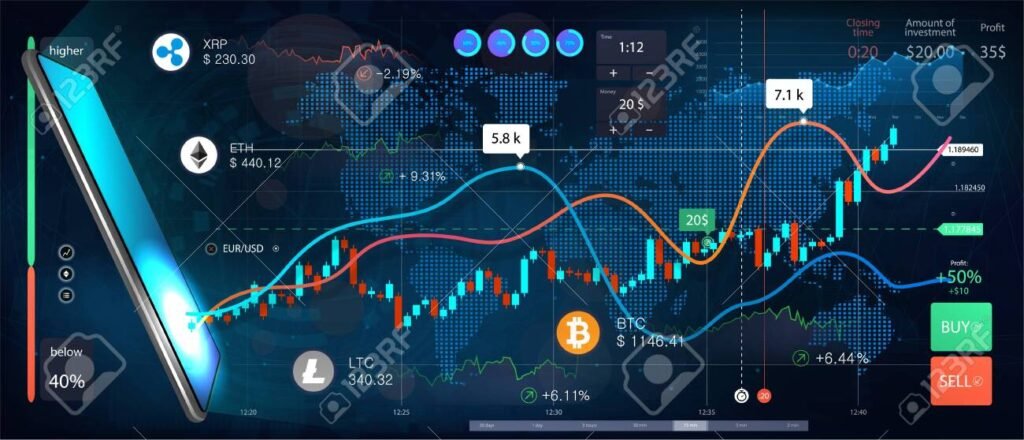
What Is Crypto Data Online?
Crypto data online refers to live and historical data collected from cryptocurrency markets and blockchain networks.
Key Data Types
- Real-time price updates
- Trading volume
- Market capitalization
- Order book data
- Technical indicators
- On-chain analytics
- Market sentiment
This data provides valuable insights into market behavior and helps traders make better decisions.
Why Crypto Data Is Essential for Trading
Trading without data is like navigating without a map.
Benefits
- Faster decision-making
- Improved trade accuracy
- Better entry and exit points
- Reduced emotional trading
- Increased profit potential
Smart traders always rely on data-driven strategies.
Strategy 1: Real-Time Price Tracking
Monitoring live price movements is the foundation of crypto trading.
Use platforms like:
- CoinMarketCap
- CoinGecko
Tips
- Track top cryptocurrencies
- Monitor price spikes
- Set alerts for key levels
Strategy 2: Technical Chart Analysis
Charts help visualize market trends. Crypto
A powerful tool is TradingView.
Focus on
- Candlestick patterns
- Trend lines
- Support and resistance
- Indicators
Strategy 3: Volume-Based Trading
Volume confirms price strength.
Key Signals
- High volume + rising price = strong trend
- Low volume = weak movement
Tip
Always use volume for confirmation.
Strategy 4: Trend-Following Strategy
Trading with the trend increases success rates.
Types of Trends
- Uptrend → buy
- Downtrend → sell
- Sideways → wait
Strategy 5: Indicator-Based Strategy
Indicators provide deeper insights.
Popular Indicators
- Moving Averages
- RSI
- MACD
- Bollinger Bands
Tip
Combine multiple indicators for accuracy.
Strategy 6: Support and Resistance Trading
These are key price zones.
- Support → buying opportunity
- Resistance → selling opportunity
Strategy 7: On-Chain Data Analysis
On-chain data reveals blockchain activity.
Use tools like:
- Glassnode
- CryptoQuant
Insights
- Whale movements
- Exchange inflows/outflows
- Wallet activity
Strategy 8: Market Sentiment Analysis
Sentiment reflects trader emotions.
Influences
- News
- Social media
- Global events
Strategy
Buy during fear, sell during greed.
Strategy 9: Multi-Timeframe Analysis
Analyze multiple timeframes for accuracy.
Example
- Daily → trend
- 4H → confirmation
- 1H → entry
Strategy 10: Breakout Trading Strategy
Breakouts signal strong price movement.
Steps
- Identify key levels
- Wait for breakout
- Confirm with volume
- Enter trade
Strategy 11: Scalping Strategy
Scalping focuses on small, quick profits.
Requirements
- Real-time data
- Fast execution
- High liquidity
Strategy 12: Swing Trading Strategy
Swing trading captures medium-term trends.
Benefits
- Less stress
- More analysis time
Strategy 13: Liquidity Analysis
Liquidity affects trade execution.
Strategy
Trade high-liquidity coins for better results.
Strategy 14: Risk Management Strategy
Risk management protects your capital.
Rules
- Risk 1–3% per trade
- Use stop-loss
- Diversify portfolio
Strategy 15: Data Combination Strategy
Combine multiple data sources.
Combine
- Price
- Volume
- Indicators
- Sentiment
- On-chain data
Strategy 16: Real-Time Alerts
Alerts help you react quickly.
Benefits
- Track price movements
- Detect breakouts
- Save time
Strategy 17: Backtesting Strategy
Test strategies using historical data.
Benefits
- Improve accuracy
- Identify weaknesses
- Build confidence
Strategy 18: Avoid Emotional Trading
Emotions can reduce profits.
Common Mistakes
- FOMO
- Panic selling
- Overtrading
Strategy 19: Trading Journal
Track your trades.
Advanced Strategy: Order Flow Analysis
Order flow shows how money is moving in the market in real time.
What to Analyze
- Buy vs sell pressure
- Large market orders
- Sudden liquidity changes
Benefit
Helps you understand who is controlling the market (buyers or sellers).
Using Moving Average Crossovers
Moving averages help identify trend changes.
Popular Strategy
- 50 MA crossing above 200 MA → bullish signal
- 50 MA crossing below 200 MA → bearish signal
Tip
Use this strategy for longer-term trades.
Relative Strength Index (RSI) Strategy
RSI helps identify overbought and oversold conditions.
Key Levels
- Above 70 → overbought (sell signal)
- Below 30 → oversold (buy signal)
Benefit
Improves entry timing.

MACD Strategy for Trend Confirmation
MACD is a powerful trend-following indicator.
Signals
- MACD crossover → buy/sell signal
- Histogram changes → momentum shift
Tip
Combine MACD with trend analysis.
Bollinger Bands Strategy
Bollinger Bands measure market volatility.
How to Use
- Price near upper band → overbought
- Price near lower band → oversold
Benefit
Helps identify breakout opportunities.
News Trading Strategy
Crypto prices react quickly to news.
Examples
- Government regulations
- Exchange hacks
- New partnerships
Tip
Always confirm news with data before trading.
Arbitrage Trading Strategy
Arbitrage involves buying crypto on one exchange and selling on another.
Benefit
- Low-risk profit opportunity
Requirement
- Fast execution
- Real-time price tracking
Dollar-Cost Averaging (DCA) Strategy
DCA reduces the impact of volatility.
How It Works
- Invest fixed amounts regularly
- Buy more when prices are low
Benefit
Great for long-term investors.
Portfolio Rebalancing Strategy
Rebalancing keeps your portfolio balanced.
Steps
- Review performance
- Adjust asset allocation
- Reduce risk exposure
Understanding Market Cycles
Crypto markets move in cycles.
Phases
- Accumulation
- Uptrend
- Distribution
- Downtrend
Tip
Identify the cycle to make better decisions.
Security Tips for Crypto Traders
Protect your assets while trading.
Best Practices
- Use strong passwords
- Enable 2FA
- Avoid suspicious links
- Use secure wallets
Psychology of Successful Traders
Mindset is as important as strategy.
Traits
- Discipline
- Patience
- Consistency
- Risk awareness
Weekly Trading Review Strategy
Review your trades weekly.
Analyze
- Winning trades
- Losing trades
- Mistakes
Benefit
Continuous improvement.
Bonus: Expert-Level Tips
- Focus on high-probability setups
- Avoid trading during uncertainty
- Don’t chase the market
- Always have a plan before entering trades
- Learn from both wins and losses
Record
- Entry and exit
- Strategy used
- Results
Strategy 20: Continuous Learning
Crypto markets evolve constantly.
Tips
- Learn new strategies
- Study market behavior
- Improve continuously
Best Tools for Crypto Data Online
- CoinMarketCap
- CoinGecko
- TradingView
- Glassnode
- CryptoQuant
Common Mistakes to Avoid
- Trading without data
- Ignoring volume
- Overusing indicators
- Following hype coins
- Poor risk management
Final Thoughts
Using crypto data online strategies for better trading results can significantly improve your performance in the crypto market. By relying on real-time data rather than guesswork, traders can make smarter decisions, reduce risk, and increase profits.
Combining tools like TradingView, Glassnode, and CryptoQuant gives you a powerful edge in analyzing the market.
In the fast-moving world of crypto, data is your greatest advantage. Use it wisely, stay disciplined, and keep improving to achieve long-term trading success. 🚀
About The Author
